

Uniting in Devotion: How India Celebrates Navratri and Welcomes Maa Durga
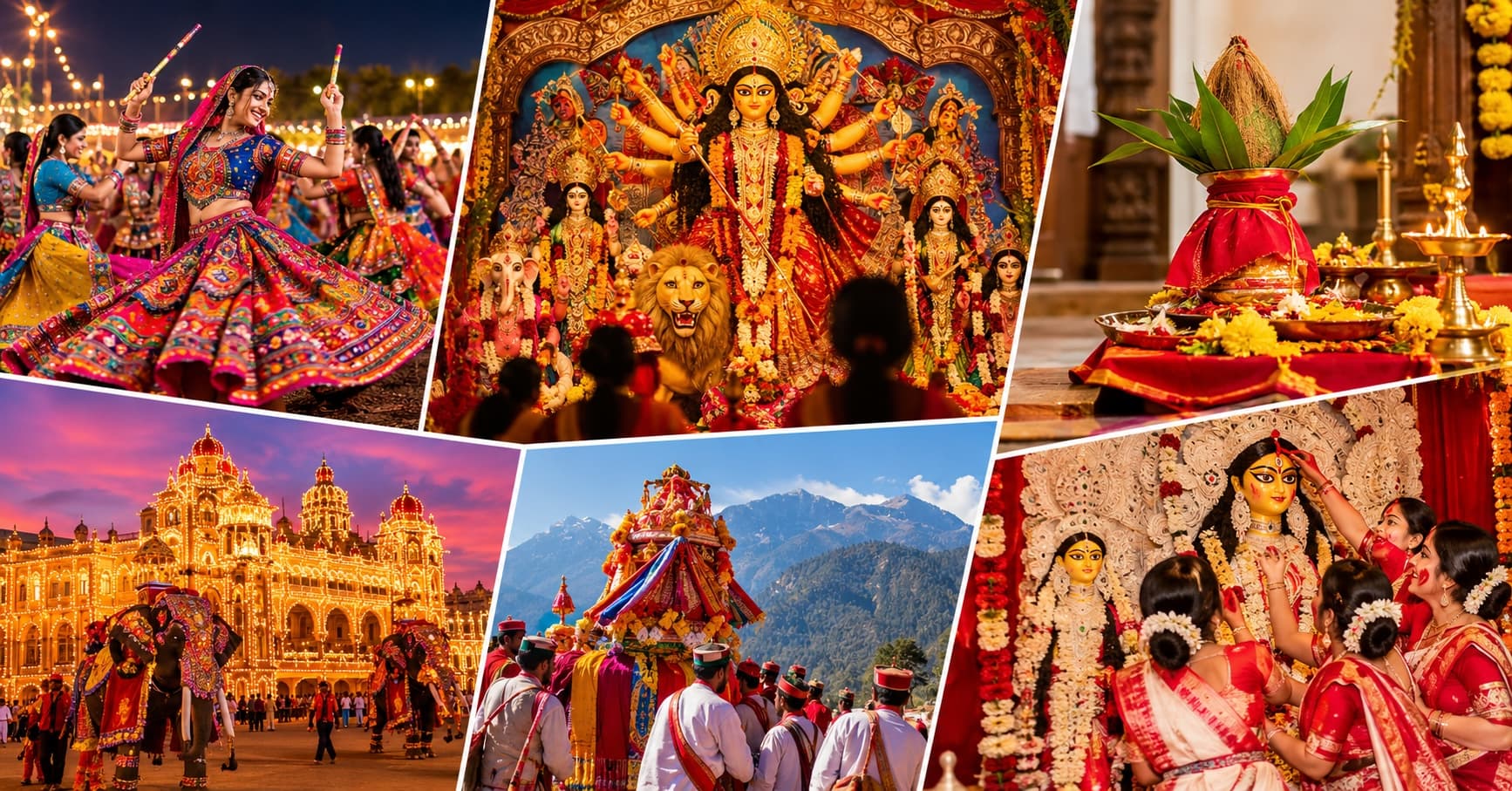
Every autumn, as the scorching summer retreats and a cool breeze heralds the onset of festive season, India transforms into a vibrant canvas of color, music, and profound spirituality. At the heart of this divine transformation is Navratri—a nine-night, ten-day festival dedicated to the worship of Maa Durga (the Divine Mother) and her nine sacred avatars (the Navadurga).
Rooted in the victory of light over darkness and good over evil, Navratri celebrates Maa Durga’s triumph over the demon Mahishasura, as well as Lord Rama’s victory over Ravana. Yet, across India's vast geographical and cultural landscape, this shared mythology expresses itself in uniquely beautiful ways. From the rhythmic echo of wooden sticks in Gujarat to the grand artistic pandals of Bengal, and from quiet sacred altars in the North to royal elephant processions in the South, here is a journey through how different regions of India welcome and honor the Divine Mother.
1. Western India: The Rhythmic Devotion of Gujarat & Maharashtra
In Western India, Navratri is a thrilling fusion of profound spiritual reverence and exuberant dance.
Gujarat: Garba, Dandiya, and the Eternal Flame
In Gujarat, Navratri is synonymous with Garba and Dandiya Raas. However, behind the world’s longest dance festival lies deep cosmic symbolism.
The word Garba derives from the Sanskrit term Garbha (womb). At the center of every traditional dance circle sits a Garbha Deep—a perforated earthenware pot with a lamp burning continuously inside. This lamp represents the divine spark of life and the divine womb of Maa Shakti, illuminated within every human being.
Welcoming the Goddess: Families begin by performing Ghatasthapana—setting up a clay pot filled with holy water, topped with coconut and mango leaves, symbolizing the presence of Maa Amba.
The Ritual of Dance: Every evening, after the Aarti, people of all ages dress in vibrant Chaniya Cholis and Kediyas embellished with mirror work. They form concentric circles around the Garbha Deep or an idol of Maa Amba, dancing to songs that praise her divine grace. The circular movements signify the cycle of time—from birth to death to rebirth—with only the central divine energy remaining constant.
Maharashtra: Ghatasthapana and Bhondla
In neighboring Maharashtra, Navratri focuses on Ghatasthapana, where a sacred vessel is set upon a small mound of soil sown with nine types of seeds (Navadhanya). As the seeds sprout into tender green shoots over nine days, they symbolize fertility, agricultural prosperity, and the life-giving force of the Goddess.
Young women also celebrate Bhondla or Hadga, gathering in the evenings around a picture of an elephant (representing Lord Ganesha and prosperity) to sing traditional folk songs, play games, and share hidden offerings known as Khirapat.
2. Eastern India: The Grand Artistry of West Bengal & the Northeast
For Bengalis around the world, Durga Puja is not merely a festival—it is an emotion, a homecoming, and a monument of living heritage (recognized by UNESCO as Intangible Cultural Heritage).
West Bengal: Receiving the Daughter Home
In Bengali culture, Maa Durga is worshiped not only as a formidable supreme deity but also as Uma—the beloved daughter who returns from her husband’s heavenly abode in Mount Kailash to visit her earthly home for five short days (from Sashthi to Dashami).
Mahalaya: The welcome begins at dawn on Mahalaya with the famous radio recitation of Mahishasuramardini by Birendra Krishna Bhadra. The invocation calls upon the Goddess to descend to Earth.
Pandals and Pratimas: Towns and cities transform into open-air art galleries. Intricately crafted clay idols of Durga, accompanied by her children—Lakshmi, Saraswati, Ganesha, and Kartikeya—are housed inside majestic, themed pandals.
Dhunuchi Naach and Sandhi Puja: The nights come alive with the sound of Dhak (traditional drums) and the fragrant smoke of frankincense during Dhunuchi Naach—a devotional dance performed with smoking earthenware burners. The festival reaches its spiritual crescendo during Sandhi Puja, conducted at the exact juncture between Ashtami and Navami, marking the moment Maa Durga slays Chanda and Munda.
Bijoya Dashami: On the final day, married women perform Sindoor Khela, smearing red vermilion on the Goddess and one another, wishing for marital harmony before the idol is immersed in water (Bisarjan), bidding a tearful farewell to their divine daughter.
Assam and Odisha
In Assam and Odisha, similar grand worship takes place. In Assam’s Kamakhya Temple, one of the primary Shakti Peethas, Navratri involves powerful Tantric rituals, special pujas, and thousands of devotees seeking the blessings of the Mother Goddess.
3. Northern India: Fasting, Ramlila, and Kanya Pujan
In the northern plains—including New Delhi, Uttar Pradesh, Punjab, Bihar, and Himachal Pradesh—Navratri is marked by austere devotion, grand theatrical storytelling, and intense prayer.
The Nine Forms of Navadurga
Devotees strictly observe fasts (Vrat) for nine days, abstaining from meat, alcohol, onions, garlic, and processed grains. They eat simple Sattvic food made from Kuttu (buckwheat flour), Sabudana (tapioca), and fruits. Each day is dedicated to a specific form of the Goddess:
Shailaputri (Daughter of the Mountains)
Brahmacharini (The Devout Seeker)
Chandraghanta (The Divine Warrior)
Kushmanda (Creator of the Universe)
Skandamata (Mother of Skanda/Kartikeya)
Katyayani (The Slayer of Demons)
Kalaratri (The Destroyer of Darkness)
Mahagauri (The Radiant Goddess)
Siddhidatri (Giver of Divine Powers)
Ramlila and Ravana Dahan
Parallel to Durga Puja, Northern India celebrates the story of the Ramayana. Nightly re-enactments of Lord Rama’s life—known as Ramlila—take place across towns and villages. On the tenth day, Dussehra (Vijayadashami), massive effigies of Ravana, Kumbhakarna, and Meghnada are filled with firecrackers and set ablaze, signifying the triumph of righteousness (Dharma).
Kanya Pujan: Honoring the Divine Girl Child
On Ashtami (eighth day) or Navami (ninth day), families perform Kanya Pujan (or Kanjak). Nine young girls, representing the nine manifestations of Maa Durga, are invited into homes. Their feet are washed, sacred red thread (Mauli) is tied around their wrists, and they are served a special meal of Puri, Chana (black chickpeas), and Halwa. Devotees bow before them to seek their blessings, recognizing the divine feminine present in every child.
4. Southern India: Golu, Sacred Plants, and Royal Grandeur
In Southern India, Navratri takes on a peaceful, artistic, and deeply ceremonial atmosphere, blending family tradition with state heritage.
Tamil Nadu: Bommai Golu and the Ladder of Evolution
In Tamil Nadu, homes are transformed into living museums through Bommai Golu—a multi-tiered display of wooden and clay dolls placed on an odd number of steps (usually 3, 5, 7, or 9).
Symbolism of the Steps: The bottom steps display animals and plants, middle steps depict human trades and everyday life, and upper steps feature divine figures, saints, and deities. This represents the soul’s spiritual evolution from simple biological life to divine realization.
Community Connection: Neighbors and relatives visit each other's homes to view the Golu displays, recite devotional hymns (Kritis), and receive Sundal (a healthy, seasoned legume dish) along with gifts of turmeric, kumkum, and betel leaves.
Karnataka: Mysore Dasara and Royal Elegance
In Karnataka, Navratri is celebrated as Nada Habba (the State Festival). The celebration in Mysuru is legendary, dating back centuries to the Vijayanagara Empire and the Wodeyar dynasty.
According to local lore, Mysuru derives its name from Mahishasura, who was slain by Goddess Chamundeshwari (a form of Durga) atop the Chamundi Hills.
Light and Pageantry: The grand Mysuru Palace is illuminated by over 100,000 bulbs every night.
Jumboo Savari: On Vijayadashami, a magnificent procession features a golden idol of Goddess Chamundeshwari seated on a golden howdah atop a decorated royal elephant, accompanied by traditional dancers, musicians, and tableaux.
Kerala: Saraswati Puja and Vidyarambham
In Kerala, the final three days of Navratri (Ashtami, Navami, and Dashami) are dedicated primarily to Maa Saraswati, the Goddess of Knowledge, Arts, and Wisdom.
Pooja Veypu: On Durgashtami evening, students and scholars place their books, musical instruments, and tools at the altar before Goddess Saraswati. No study or work is undertaken on Navami, as the tools are blessed by divine energy.
Vidyarambham: On Vijayadashami morning (Pooja Eduppu), young children undergo Vidyarambham—their formal initiation into the world of education. Guided by elders or priests, children write their first words (often "Hari Sri Ganapataye Namah") in a tray of rice or sand using their index finger or a gold ring, marking the sacred beginning of their learning journey.
Andhra Pradesh & Telangana: Bathukamma
In Telangana, Navratri coincides with Bathukamma, a festival honoring Goddess Gauri through nature. Women build beautiful floral stacks in concentric circles using seasonal wildflower blooms like Gunugu and Tangedu. They gather in circles around these floral mounds, singing soulful folk songs that honor mother nature, womanhood, and life before immersing the flowers in local water bodies.
5. Central, Regional, and Tribal Celebrations: Hidden Gems
Beyond the major regional highlights, smaller pockets of India showcase astonishingly unique traditions.
Bastar Dussehra (Chhattisgarh)
Unlike celebrations elsewhere that honor the slaying of Mahishasura or Ravana, the 75-day-long Bastar Dussehra in Chhattisgarh centers on the local tribal deity, Goddess Danteshwari. It is a festival of community unity, dynamic tribal rituals, and grand wooden chariot processions (Rath Yatra) constructed entirely by local artisans without using a single metal nail.
Kullu Dussehra (Himachal Pradesh)
In the serene valley of Kullu, celebrations actually begin on Vijayadashami when celebrations in the plains end. Over 200 local deities (Devtas) from surrounding mountain villages are brought down in palanquins to the Dhalpur Maidan to pay homage to Lord Raghunath (Rama), filling the Himalayan air with blowing horns and beating drums.
The Common Thread: The Universality of Shakti
While the sights, sounds, flavors, and rituals change dramatically across state borders, the spiritual core of Navratri remains unbroken across India.
Navratri is ultimately a celebration of Shakti—the primordial cosmic energy that animates the universe. It serves as a annual reminder of three timeless truths:
The Divine Feminine: It elevates womanhood, motherhood, and creation as sacred forces worthy of deep reverence.
Inner Purification: Fasting, prayer, and dance serve to cleanse the mind and body of negative traits such as pride, anger, jealousy, and greed.
Triumph of Goodness: No matter how formidable the darkness (Mahishasura or Ravana) may seem, divine light and truth will always prevail.
When Maa Devi is welcomed into homes, pandals, and temples across India, she is welcomed not just as a distant sovereign, but as a loving mother, a fierce protector, an inspiring daughter, and the divine breath within us all.
Happy Navratri and Subho Sharadiya! May the blessings of Maa Durga bring strength, joy, wisdom, and inner peace to your life.