

The Ultimate Onam Celebration: Culture, Sadhya, Fashion, and Festivities
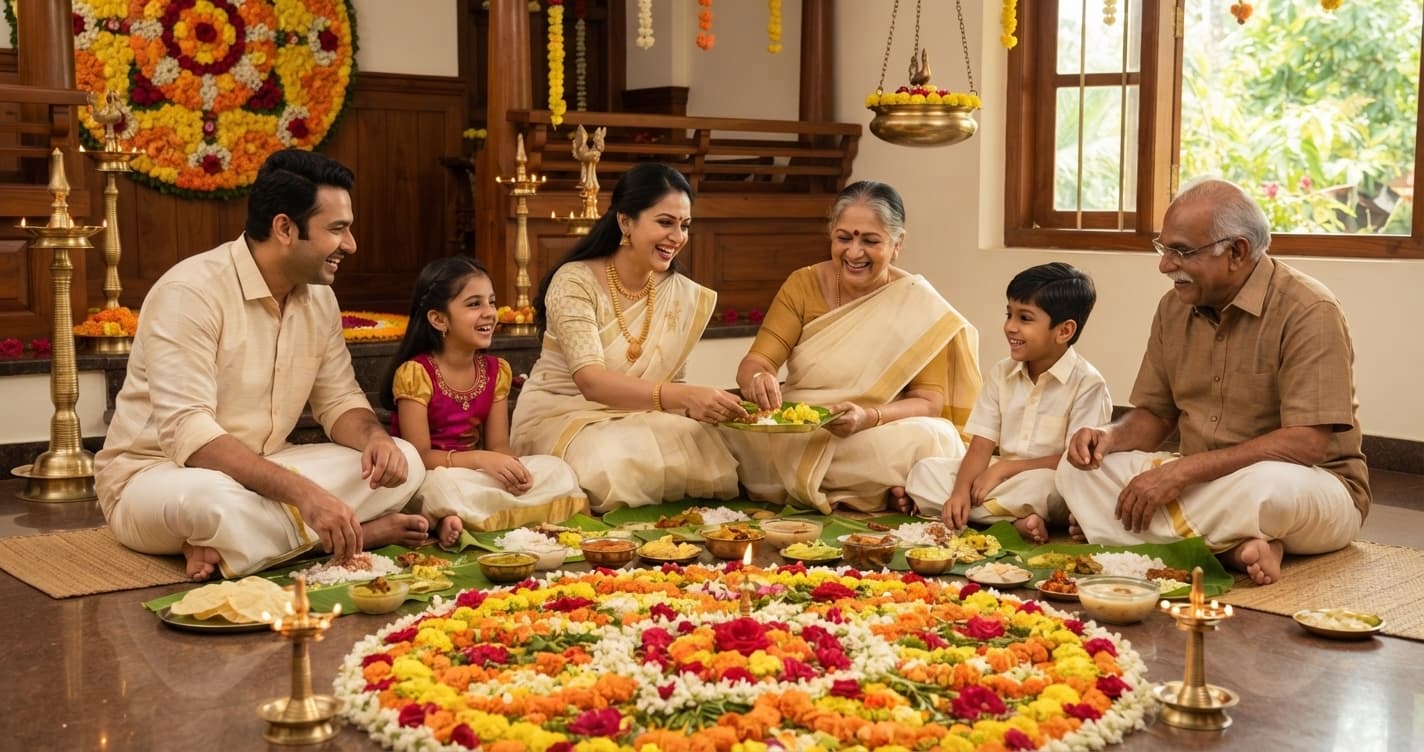
Introduction: The Magic of Onam
Onam is the official state festival of Kerala, India, celebrated to welcome the spirit of the benevolent King Mahabali. It is a harvest festival characterized by floral decorations, boat races, traditional dance, and a massive vegetarian feast known as the Onasadya.
Every year, the lush green state of Kerala transforms into a vibrant tapestry of flower carpets, rhythmic drum beats, and aromatic banana-leaf feasts. This ten-day harvest festival honors the mythical return of King Mahabali, utilizing daily rituals that reflect a living, breathing culture. For the millions of Keralites living in the global diaspora, Onam serves as an annual anchor to identity, bringing families together through the shared traditions of sadhya, pookalam, and ancestral attire.
The Legend: From Maveli to Modern Day
The Onam legend centers on Mahabali, an asura king whose reign is remembered as a golden age of equality and prosperity. According to Hindu mythology, this era was so perfect that it challenged the celestial hierarchy, leading to divine intervention.
According to the Bhagavata Purana, the gods grew envious of Mahabali's popularity and requested Lord Vishnu to intervene. Vishnu took the form of Vamana, a dwarf Brahmin, and asked for three paces of land. In a divine expansion, Vamana covered the earth and heavens in two steps, leaving no room for the third. This act pushed Mahabali into the netherworld (Pathalam).
Impressed by the king's humility, Vishnu granted him a boon: the right to return to his kingdom once a year. Onam is the joyous celebration of this annual homecoming. The festivities begin on Atham and reach a crescendo on Thiruvonam, the most auspicious day of the cycle. Since the festival's inception, it has bridged ancient folklore with modern family reunions and community feasts.
The Ultimate Onasadya Guide: 26 Dishes, One Feast
The Onasadya is a sequenced vegetarian banquet served on a fresh plantain leaf, traditionally featuring 26 dishes arranged in a precise geometry. "Sadhya refers to a traditional feast from Kerala, specifically designed to provide a balanced nutritional profile through a variety of tastes: sweet, sour, salty, bitter, pungent, and astringent."
Essential Components of the Sadhya
To master the Onasadya, one must understand the balance of flavors:
The Base: Red matta rice provides a nutty, hearty foundation.
The Savory Core: Sambar, rasam, and moru (buttermilk) act as the primary liquids to aid digestion.
The Coconut Medleys: Avial (a thick mixture of vegetables) and Kootu Curry showcase the region's reliance on fresh coconut.
The Palate Cleansers: Pulippuli and Pachadi offer tangy, yogurt-based contrasts to the richer curries.
The Sweet Finale: Payasam—specifically Palada (milk and rice flakes) or Parippu (moong dal and jaggery)—seals the meal.
Research into traditional preparation indicates that a standard family sadhya for four can take upwards of six hours to prepare. This meticulous process ensures that each dish maintains its distinct flavor profile without bleeding into the next.
Pro Tip: Always fold your banana leaf towards you after finishing the meal. This traditional gesture signals to the host that you were thoroughly satisfied with the feast.
Creative Corner: Pookalam & Decor Ideas
Pookalam is the traditional floral art of Kerala, where concentric circles of flower petals are arranged on the floor to welcome King Mahabali. The process is a lesson in patience and precision, beginning on Atham with a single circular ring of petals and adding one layer daily until ten rings are completed on Thiruvonam.
Designing Your Pookalam
To achieve an authentic look, use these traditional flowers:
Thumba: Small white flowers essential for the first day.
Chethi: Vibrant red blossoms for contrast.
Jamanthi: Yellow and orange chrysanthemums for volume.
Sankupushpam: Blue pea flowers for a royal touch.
For those celebrating outside Kerala, you can adapt the tradition using pre-printed vinyl mats as guides. Incorporating brass oil lamps (Nilavilakku) and Kasavu-themed table runners brings the festive atmosphere into a modern home. As of 2025, many urban celebrations now blend these organic petals with sustainable, biodegradable dyes to maintain the tradition while reducing waste.
Dressed in Tradition: Kasavu Chic
Kasavu refers to the gold zari border woven into off-white cotton fabric. This minimalist aesthetic embodies the elegance of Kerala's heritage, prioritizing purity and understated luxury over ornate embellishment.
Authentic Onam Attire
For Women: The Kasavu Saree or Mundum Neriyathum is the standard. Authentic pieces are often sourced from handloom cooperatives in Balaramapuram or Kuthampully. Pair the drape with temple jewelry and fresh jasmine (gajra) for a timeless look.
For Men: The Kasavu Mundu (white dhoti with a gold border) is typically wrapped with a kacha and paired with a crisp white shirt.
When shopping, look for GI (Geographical Indication) tags to ensure you are purchasing genuine handloom products rather than synthetic imitations. These certifications protect the artisanal integrity of Kerala's weaving communities.
The Rhythm of the Festivities: Pulikali and Vallam Kali
Onam's public spectacle is defined by two performance traditions that blend athletic prowess with artistic expression: the Snake Boat Races and the Tiger Dance.
Vallam Kali (Snake Boat Races)
Vallam Kali is a competitive rowing event featuring chundan vallam (snake boats). Originating as a temple-offering ritual, these vessels measure between 100 and 138 feet. Each boat can hold up to 128 rowers who move in perfect synchronization to the beat of Vanchipattu (boat songs). The Nehru Trophy Boat Race remains one of the most prestigious examples of this tradition.
Pulikali (Tiger Dance)
Pulikali is a street performance where artists paint their bodies with oil-based pigments to resemble tigers and hunters. They dance to the thunderous rhythm of chenda and thakil drums, transforming the city streets into a wild, colorful parade. This tradition emphasizes the playful, carnivalesque side of the harvest celebration.
Frequently Asked Questions
Why is Onam celebrated for ten days?
The ten-day period represents the countdown to the arrival of King Mahabali. Each day, from Atham to Thiruvonam, has its own significance and specific rituals, such as the gradual expansion of the Pookalam flower carpet.
What is the difference between Palada and Parippu Payasam?
Palada Payasam is a creamy, milk-based dessert made with rice flakes and sugar. Parippu Payasam is a richer, darker dessert made from moong dal and jaggery, often flavored with coconut milk.
How do I wear a Kerala Mundu correctly?
The Mundu is wrapped around the waist and secured with a tuck. For formal Onam occasions, men often add a kacha (a cloth belt) or fold the Mundu in half to create a shorter, more manageable length for walking.
🛍️ Shop for Onam at Takora Mart
As you prepare to celebrate Onam, Takora Mart is your one-stop destination for all your festive needs. From traditional attire to delicious snacks, we have everything to make your celebration memorable.
Essential Onam Products from Takora Mart:
Kuthampully Onam Kathakali Print Kasavu Dhoti: Embrace tradition with this elegant 4-meter dhoti that showcases the rich heritage of Kerala. Shop here.
Paithrka Banana Chips (900 gm): No Onam feast is complete without crispy banana chips. Enjoy this crunchy delight as a perfect snack during the festivities. Shop here.
Pavizham Jaya Rice: Elevate your Onasadya with premium rice that adds authenticity to your traditional meal. Shop here.
Nadibalam Traditional Sweet from Malappuram (400 gm): Indulge in this delightful sweet made with grated coconut, jaggery, groundnuts, and onion—a unique treat for your guests. Shop here.
Ramodhya Zipper Combo (6-pack): Keep your kitchen organized with this practical zipper combo, perfect for storing festive ingredients. Shop here.
Maya Durga Shakti: Enhance your home decor with this beautiful representation of Durga, symbolizing strength and festivity. Shop here.
MK Fabrics Traditional Wear Silk Set: For a refined look during Onam, this silk set is an excellent choice for both men and women. Shop here.
Kitchen Treasures Tender Mango Pickle: Add a tangy twist to your Onasadya with this delicious mango pickle. Shop here.
Paithrka 100% Pure Cow Ghee (500 ml): Elevate your cooking with this pure cow ghee, essential for authentic Kerala dishes. Shop here.
Krupa Chakkilattiya Velichenna Cold Pressed Coconut Oil (500 ml): Use this high-quality coconut oil for cooking or as a part of your beauty regimen during the festive season. Shop here.
How to Shop from Takora Mart for Onam Celebrations
Visit the Website: Go to Takora Mart.
Browse Categories: Explore sections dedicated to Onam products to find everything you need.
Add to Cart: Select your desired items and add them to your cart.
Checkout: Follow the easy checkout process to complete your purchase.
Celebrate: Enjoy your Onam with the finest products from Takora Mart!
Conclusion
Onam persists because its rituals solve for both continuity and adaptation. The sadhya sequence teaches digestive wisdom, the pookalam layers teach patience, and the boat races teach the power of synchronization. Whether you are celebrating in the heart of Kerala or in a distant city, the festival's power lies in the deliberate act of welcome—for a mythical king, for distant family, and for the harvest that sustains us all.
Happy Onam. May your leaf fold toward you.